§§ Articles of Association
Table of contents
At the 6th General Assembly [2026, 1st quarter], the statutes were amended and sent to the LPD Vienna Association Department for review.
Association, assembly and media law matters (Department SVA 3)
Office hours
Monday to Friday from 7:30 a.m. to 3:30 p.m.
Email: LPD-W-Vereinsreferat@polizei.gv.at
WhatsApp or Cell: +43 1 31310 75319
LPD Vienna, Senior Councillor Stefan Kittinger;
Department for Association, Assembly and Media Law Matters;
Schottenring 79; 1010 Vienna;
DVR.0003506; GZ: XV12.585
Association name (according to ZVR):
NADEUM
(ZVR number: 252118075)
External and project name from 2026:
NADEUM-WIKO – Implementing Sustainable Thinking & Communicating Knowledge
Association headquarters:
Fenzlgasse 30 / Stg. 1 / 4th floor / Flat 14, 1150 Vienna – Rudolfsheim-Fünfhaus, Austria, EU
Association contact:
Email: office@nadeum-wiko.eu
Cell: +43 699 1111 1773
Note:
The previous email address verein@nadeum.eu is no longer in use.

Note on the linguistic presentation and history of the statutes
Gender and language rules
For reasons of better readability, the masculine form is used in these statutes for personal designations and personal nouns. These designations apply equally to persons of all genders in the sense of equal treatment. The use of the abbreviated form is for editorial purposes only and does not imply any judgement or discrimination.
Presentation of text changes
All text changes made in 2022 are presented in a uniform editorial format in the 2025 version. This adjustment was made solely to improve the readability and comprehensibility of the statutes.
All text passages that were legally and stylistically revised during the 6th General Assembly (1st quarter of 2026) and will apply from 2026 onwards are highlighted in blue. The colour coding serves solely to make the changes more visible and comprehensible for members, cooperation partners and authorities. It does not establish any independent rights or obligations. Reason for the changes in 2025/2026 Due to an internal incident in 2025, paragraphs §§ 8, §§ 9 and §§ 10 were revised to clarify and supplement them. In this context, the definition of branches with regard to their rights and obligations was also revised.
Documentation of previous versions For internal traceability of developments, previous versions of the text have been documented; only the version of the statutes adopted by the General Assembly and filed with the competent association authority is authoritative.

Note on naming from 2026 onwards
- The association is still duly registered under the name ‘NADEUM’.
- For organisational and technical reasons, particularly in connection with the previous digital infrastructure, it is no longer possible to continue using the previously used internet domains.
- To ensure a clear, unambiguous and permanently available external image, the association will therefore appear externally under the name ‘NADEUM-WIKO’ (Sustainable Thinking & Knowledge Communication) from 2026 onwards.
- The internal organisation, legal identity and all binding statutes, rights and obligations will continue unchanged under the registered association name ‘NADEUM’.
Sections 1 Name, registered office, branches
- The association bears the name ‘NADEUM – Nachhaltiges Denken Umsetzen’ (Implementing Sustainable Thinking).
Its headquarters are located in Vienna at the following address: Fenzlgasse 30/Stg1/4 Stock /Whg 14; 1150 – Rudolfsheim-Fünfhaus, Vienna, Austria, EU
Association email: office@nadeum-wiko.eu (external and internal),
Mobile: +43 (0) 699 1111 1773
Due to current circumstances (2022), the term subgroups has been replaced by ‘branch offices’. The term subgroups will therefore be removed from all of the following passages, which were crossed out until 31 June 2025, in the new version of our statutes from 1 July 2025.
Due to the current situation (2022), the term ‘subgroups’ has been replaced by ‘branch offices’. We would like to inform you that the term ‘subgroups’ has been removed from all of the following passages, which were crossed out until 31 July 2025. The term will no longer be used in the new version of our statutes, which will be valid from 1 September 2025.

§§1.1 Branches (ZN) Definition: Rights and obligations
1.1 NADEUM defines its branches as follows:
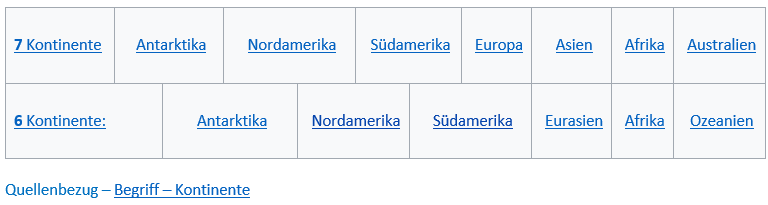
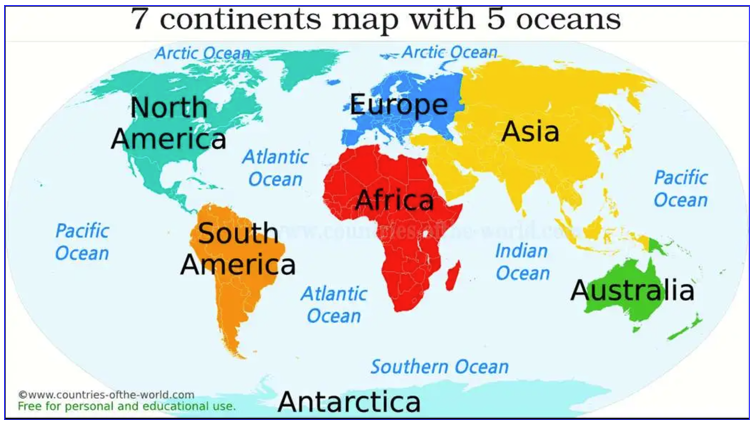
NADEUM branches may be established in all future and present constellations, such as unions, federations and states on Earth, as well as on all planets in the solar system and possible habitable locations in the universe.
However, the branches are subordinate to the MAIN ASSOCIATION NADEUM, which has its headquarters in Austria, a member state of the European Union (2025), part of the continent of Europe on Earth.
Addendum: Based on the latest astronomical findings, human settlements will only exist in the solar system in the foreseeable future. Due to the enormous spatial distance, these will be able to freely design their statutes. However, they should mention the basic idea of the NADEUM headquarters, our mission statement, in their statutes and live and act according to it.
NADEUM therefore defines the term ‘branch offices’ as given under the following conditions:
The branches have the right to: …
In all places in the universe that are habitable by humans, subject to the original statutes of the main association NADEUM, groups of like-minded people and thus branches may be established.
1. Subject to the original statutes of the main association NADEUM, it is possible to establish groups of like-minded people and thus branches in all places in the universe that are habitable by humans.
2.
2.1. Should legal circumstances at the new locations of the branches be of relevance, they shall be added as such to the respective existing paragraphs/statutes under the heading ‘Supplement’ [E] (§§E1…),” or as an
addendum below the last paragraph of the statutes as Appendix [A] (§§A1…).
2.2. All legal and cultural rules of conduct that are of existential importance for the branches on site must be reported to the main association in Vienna.
(may not contradict §§1.1/item 7)
A justification for these supplements is required and must be announced and submitted in writing.
2.3 The branches may only implement the additions as supplements to the respective statutes once the association’s executive committee (association board) of NADEUM in Vienna has given its official ‘OK’.
3. This applies exclusively to: The branches nominate delegates who, within the framework of delegate conferences – preferably via video conference – discuss NADEUM topics relating to the branches and exchange ideas with the NADEUM board in order to promote project progress.
> This regulation also serves to preserve the liability exclusions of NADEUM HQ vis-à-vis the branches.
The branches shall be responsible for:
4. All future branch offices – chairpersons are subordinate to the Presidium (Executive Board) of NADEUM in Vienna (Austria/EU). Should the Presidium, the Executive Board of NADEUM, be voted out of office at a General Assembly and replaced by a new Presidium, a new Executive Board of NADEUM, the headquarters shall remain the responsibility and main seat of NADEUM in Vienna (Austria/EU).
5. Branches must use the name ‘NADEUM’ in the first place.
Current example: In December 2024, we established an active NADEUM branch in Kenya. Its name is ‘NADEUM-KENYA-AFRICA’. Its statutes comply with Kenyan association law. They have been reviewed by NADEUM headquarters and meet our requirements.
6. Throughout the entire organisation of the NADEUM association and its branches, German (Austrian) and English (GB) are used as the association languages. How the respective members of the branches communicate with each other is up to them. In East Africa, this is Swahili.
7. At NADEUM, as well as at its branches, we conduct our business and work in a secular manner. No religion or ideology may be used as grounds for exclusion. Members who are distinguished by their ethnicity, customs, and religion, and who practise and live according to these in their normal daily lives, must not bring this into NADEUM and its branches.
The exclusion of a NADEUM member or a NADEUM branch member shall take place as follows:
8. Anyone who behaves aggressively, disparagingly or contemptuously towards those with different opinions, genders, personal orientations, religions, philosophies or ideologies within NADEUM and its branches, or who insults or uses violence, thereby bringing NADEUM into disrepute, will be immediately expelled from NADEUM or have their membership terminated.
(see ‘§§ 9 and 10’)
9. In the event of justified immediate expulsion from NADEUM or its branch, all materials provided must be returned immediately, all claims resulting from membership shall lapse, all identification documents shall become invalid and must be returned with immediate effect. Any disregard of these regulations will result in legal consequences.
Each branch has the option of:
10. Each NADEUM branch may have and manage its own budget. Should this be the case and financial irregularities arise in the branch, the entire executive committee (presidium) of the branch shall be liable.
11. In the NADEUM branches, too, all members in all their functions are voluntary workers and are not remunerated. The same rules apply in this respect as in Austria. Association officials serve the cause and carry out all activities for the association voluntarily and with joy, as they are convinced that in this way they can help and support many fellow human beings in the best possible way.
Each branch office is permitted to establish companies of all legal forms:
NADEUM allows for the establishment of essential auxiliary businesses, the income from which serves to achieve the association’s goals.
NADEUM HQ and its branches may employ external staff for this purpose.
12. All profit-making enterprises established by members of the NADEUM branch after a general meeting shall transfer 14% of their profits after tax to ‘NADEUM in Vienna’ on an annual basis. Higher percentages may be agreed upon by mutual consent depending on the circumstances.
13. Due to the non-profit status of the association as defined in the NADEUM statutes in the sense of a ‘non-governmental’ and ‘non-profit organisation’, no profits may be distributed. In accordance with the statutes, profits must be reinvested in ongoing projects. If the current projects span more than one year, each branch may carry over its project budget to the next calendar year. All external activities must be paid for by the branches or from project-related budgets. The model for the type of company is the Austrian non-profit limited company – social enterprise.
14. The establishment of a profit-making company must be approved by a NADEUM branch general meeting with at least a two-thirds majority of the NADEUM branch members present.
14.1. Before a company is established, all the steps relevant to setting up a company must be clarified.
Exkurs / in englischer Sprache, zur Erläuterung:
Social Enterprise
By ADAM BARONE
Reviewed by ERIC ESTEVEZ
Updated Oct 27, 2020
Link:
Social Enterprise Definition (investopedia.com)
https://www.investopedia.com/terms/s/social-enterprise.asp
What Is a Social Enterprise?
A social enterprise or social business is defined as a business that has specific social objectives that serve its primary purpose. Social enterprises seek to maximize profits while maximizing benefits to society and the environment. Their profits are principally used to fund social programs.
Understanding Social Enterprises
The concept of a social enterprise was developed in the UK in the late 1970s to counter the traditional commercial enterprise. Social enterprises exist at the intersection of the private and volunteer sectors. They seek to balance activities that provide financial benefits with social goals, such as providing housing to low-income families or job training.
Funding is obtained primarily by selling goods and services to consumers, although some funding is obtained through grants. Because profit-maximization is not the primary goal, a social enterprise operates differently than a standard company.
While earning profits is not the primary motivation behind a social enterprise, revenue still plays an essential role in the sustainability of the venture. Sustainable revenue differentiates a social enterprise from a traditional charity that relies on outside funding to fulfil its social mission. This goal does not mean social enterprises cannot be profitable; it’s simply that their priority is to reinvest profits into their social mission, rather than fund pay-outs to shareholders.
The Organization for Economic Cooperation and Development (OECD) identifies social enterprises as being highly participatory, with stakeholders actively involved and a minimum number of paid employees.
KEY TAKEAWAYS
- A social enterprise is a business with social objectives that serve its primary purpose.
- Maximizing profits is not the primary goal of a social enterprise as is with a traditional business.
- Unlike a charity, social enterprises pursue endeavours that generate revenues, which fund their social causes.
- Regarding employment, preference is given to jobseekers from at-risk communities.
Special Considerations
Employees of social enterprises come from many backgrounds, but priority is given to those who are from at-risk sections of the community. These include long-term unemployed workers, those who have historically worked in jobs where they were informally paid, and members of marginalized groups. The social enterprise may seek to provide a living wage, which in most cities is above the minimum wage. Sometimes, drawing employees from at-risk groups may be the stated social goal of the enterprise.
Social Enterprise vs. Social Entrepreneurship
A social enterprise is not to be confused with social entrepreneurship, which tends to focus on individuals who develop solutions to social and environmental problems using existing business techniques and strategies. Social entrepreneurs seek innovative ways and operate to drive change, whereas social enterprises form to fulfil a business purpose and solve societal needs through their commercial activities.
Examples of a Social Enterprise
Many social enterprises successfully maximize improvements in social well-being. For example, Warby Parker is an American eyeglass retailer that donates a pair of glasses to someone in need for every pair sold. Tom’s, a California-based retailer, similarly has pledged to donate a pair of shoes or sunglasses for every pair sold. Also, Climate Smart trains businesses and gives them software tools that let them track and cut their greenhouse gas emissions.
Sections 2 Scope of activities, purpose of the association
- The association should have the opportunity to operate globally and network with people worldwide so that it can pursue its commitment to establishing and implementing ideas of sustainability.
- The basic idea is to give future generations the opportunity to acquire knowledge so that they can treat themselves and their environment in a more sustainable manner (conserving resources rather than being climate neutral). This can be achieved, for example, through workshops, events, trade fairs and other forms of exchange. Among other things, the handling of consumer goods should be addressed and, in particular, alternatives to certain materials should be made available.
- a) Plastics, currently the product that has the most severe impact on all types of water bodies, should be recycled or, if possible, avoided altogether.
- b) Plastics, known internationally as plastic, should be labelled according to the type of plastic so that all producers and consumers are able to identify them correctly and thus return them to the recycling process.
- c) The aim is to give plastic waste a value in order to make the benefits of reusability visible to society.
- People should act and live in a socially competent and responsible manner. (In the old statutes prior to 2022, this was §2Pkt2, last sentence).
- A key area of action is working across continents. For example, in the form of student or craftsman exchanges, which enable different cultures and cultural circles to network with each other. This makes it easier to process, accept and implement new ideas. It creates an environment in which those involved complement and inspire each other.
- Cooperation with like-minded organisations should be sought. Projects that are agreed upon by both organisations can be worked towards jointly. (In the old statutes prior to 2022, this was §2Pkt4)
- The members of the association who express their ideas, wishes and hopes should act in accordance with the guideline expressed by the association’s name
- ‘Nachhaltiges Denken Umsetzen’ (Implementing Sustainable Thinking) and cooperate with parties outside the association. They are therefore responsible for sustainability. Ideas can only be implemented within this framework.
- The association should enable the realisation of sustainability in all matters.
Section 3: Ideology
The term ‘ideology’ is replaced by the term ‘mission statement’.
Section 3: Mission statement, name & logo
[1] Mission statement – Mission & values
NADEUM-WIKO stands for the promotion of sustainable thinking, knowledge transfer and collaborative development. Our mission statement describes the purpose, vision and values that guide our actions. It serves as a guide for members, partners and the public, and makes clear what the association stands for and what its long-term goals are. This mission statement is used as a binding set of values in all of the association’s day-to-day activities.
- Addendum: Mission Statement and Core Values
- The association’s mission statement is defined by five core values: sustainable thinking, implementation, knowledge, communication and cooperation.
- Since NADEUM was founded, these values have formed the foundation of the association and, at the same time, the conceptual basis for the association’s name and guiding principles.
- Linguistic Adaptation and Translations
- In 2025, the texts of the mission statement were linguistically revised to improve clarity, expression and modern language usage.
- The revisions do not change the meaning, goals or values of the five core principles.
- Translations into other languages must preserve the original meaning, while the legally protected name and logo NADEUM remain unchanged.
- From 2026 onwards, due to internal developments, the association may also be referred to externally as NADEUM-WIKO.
- Documentation of the original versions
- All original text versions of the mission statement valid from 2022 to 2025 are documented and can be viewed upon reasonable request by members, partners or competent authorities.
- This ensures the transparency and traceability of the association’s historical development.
[2] Name and public image
- The legal name of the association is NADEUM, as entered in the register of associations.
- Since 2026, the association has been operating under the extended name NADEUM-WIKO in order to more clearly represent its current focus – communicating sustainable thinking through knowledge.
[3] Logo – term and protection
The logo ‘NADEUM’ or ‘NADEUM-WIKO’ represents the visual brand essence of the association.
- a) The term ‘logo’ is an internationally used expression for a graphic symbol that represents a company, organisation or project. It is used as a foreign word in German and is generally recognised.
- b) The legal designation of the logo in terms of trademark and design law is ‘word and figurative mark’ or ‘figurative mark’: this means that the combination of the word element (“NADEUM” / ‘NADEUM-WIKO’) and the graphic representation is legally protected and may only be used by the association or with its express permission.
- c) Regardless of the viewer’s language – be it German, English or another language – the registered name ‘NADEUM’ or ‘NADEUM-WIKO’ may only be used as the logo name in the approved form. The translation of the key words or content does not change the legally protected wording of the logo.
[4] Use and protection of the logo
- The logo may only be used within the scope of the purposes and usage guidelines approved by the Executive Board.
- Any use of the logo outside the scope of the association’s purpose or without the express written consent of the Executive Board is prohibited.
- The use of the logo by partners, sponsors or third parties requires a separate agreement specifying the purpose, scope and duration of use.
Summary of the amendment:
The five core values are not only conceptually central, but also form the basis for the name, mission statement and logo. Any linguistic translation of the values must preserve the original intention, while the logo NADEUM / NADEUM-WIKO remains legally protected.
1️⃣ Addition to the Articles of Association: § 3-E Foundations & Identity
👉 This paragraph does not amend Section 3, but supplements it by providing clarification and safeguards.
§ 3-E Foundations & Identity (supplement to § 3)
- The content described in § 3 ‘Mission Statement, Name & Logo’ – in particular the mission statement, the five core values, the association name NADEUM and the external image NADEUM-WIKO, as well as the logo – form the ideological, legal and identity-defining foundations of the association.
- These foundations are an integral part of the association’s identity and apply both within and across the association as a binding frame of reference for members, partners and cooperating organisations.
- The legal protection, use and restrictions on the use of these foundations are regulated in a supplementary and binding manner in the General Terms and Conditions (GTC), point 7 ‘Intellectual Property’.
- The GTC specify the foundations laid down in the statutes, in particular with regard to:
- Copyright, trademark and labelling rights,
- permitted and prohibited forms of use,
- translations, adaptations and external uses,
- approval requirements and authorisation procedures.
- In the event of differing interpretations, the Articles of Association and GTC shall be consulted together; they complement each other and pursue the same purpose: the protection of the identity, values and content of NADEUM / NADEUM-WIKO.
✅ Result:
- Articles of Association = Who we are & what we stand for
- GTC = How this may be handled
1. NACHALTIGES:
Sustainability means that those who want to give meaning to this word should use our planet’s resources in such a way that future generations can also benefit from them. Sustainability is defined by the three pillars of environment, social welfare and economy.
2. DENKEN:
Think before you act. Consider carefully what you want to do. Be sparing with your words and include everything before you speak and define. Careful consideration should be given to creating awareness of sustainable development.
3. UMSETZEN:
Implement everything you can think of that will benefit our biosphere (Planet Earth). But do so with moderation and prudence. Remember that you should also be a role model for other inhabitants of this planet. Try to follow up your dreams, hopes and desires with actions.
3.1) All future locations in our solar system and in the universe must be treated with the same respect.
4. WISSEN:
Acquiring and imparting knowledge is essential in order to keep pace with the ongoing implementation of new findings. Continuing education will therefore be a central aspect of the association. Share your knowledge with people who are willing to actively change. Give them the opportunity to increase their level of knowledge through well-founded research reports. Try to support all people who are looking for new paths.
5. KOMMUNIKATION:
In order to implement all of the above points, language, gestures, feelings and smell are required. We humans and all other living beings need these qualities in order to communicate with each other, exchange ideas and connect the past with the future.
Sections 4 Intangible assets
- The intellectual resources that enable the association to achieve its goals should primarily come from the knowledge of its members. They can act in an advisory capacity, in working groups, but also seek exchange with people and groups outside the association. An exchange of ideas and mutual cultural enrichment would be beneficial. Intellectual resources are also generated through regular contact between members.
Section 5 Material resources
- The necessary material resources shall be raised through:
1.1) Membership fees
1.2) Donations
1.3) Subsidies
1.4) Funding contributions
1.5) Contributions from sponsors/patrons
1.6) Sales of sustainable regional products. - Income from events, workshops and the association’s own ventures supplement the association’s budget and must be reinvested in new projects.
- Internal sustainable projects that generate income support the NADEUM association in ensuring its independence.
- A net profit for the association and its members is not envisaged, only the financing of investments for the implementation of various projects. The association sees itself as a classic ‘non-profit organisation’.
Sections 6 Use of funds
- Any profits shall be invested in further project work.
- The association’s funds may only be used for the purposes specified in the statutes. See ‘2 Scope of activities and purpose of the association’.
- The members of the association may not receive any share of profits or other benefits from the association’s funds in their capacity as members.
- If workshops are organised and these are financed by income from external parties, a contract for work and services must be drawn up in advance in accordance with Austrian law. The speaker shall be remunerated for his or her services, unless these are provided to the association free of charge or as an intangible value.
- Addendum: In Africa, it is advisable to obtain information from the relevant government authority of the respective country about the requirements for remunerating external employees.
- If any expertise, research assignments or projects are supported by a patron or other party, the entire board of ‘NADEUM’ must be informed. The project acceptance and planning must be known and all expertise, research assignments and projects must be underpinned by sound financial planning and a feasibility study. Upon completion of each assignment, a final report including the financial statement must be submitted to the association. All project steps and financial expenses must be listed in detail. All participating persons and their areas of responsibility must also be described in detail.
(Point 6 was No. 5 until July 2025 and was only changed by the current number) - If ‘NADEUM’ has to meet an expense that has been pre-financed, this can only be done against a receipt. The amount must then be returned by the association to the respective association member within a reasonable period of time. (Point 7 was No. 6 until July 2025 and was only changed by the current number)
Sections 7 Types of membership
- The members of the association are divided into ordinary members, associate members and honorary members. Ordinary members are those persons who participate fully in the work of the association. They have active and passive voting rights.
- Associate members are persons who support the activities of the association, in particular by paying an increased membership fee. They have neither active nor passive voting rights.
- Persons who are or have been regular members of the association and who have rendered special services to the association may be appointed as honorary members.
Sections 8 Acquisition of membership
- Prior to the establishment of the association, provisional admission of members shall be carried out by the founder. This membership shall only become effective upon the legal establishment of the association.
- 2 ] This provision shall also apply mutatis mutandis to the establishment and operation of branch offices.
- The association’s executive committee or the responsible association management of the respective local branch shall decide on the admission of ordinary and extraordinary members. There is no legal right to admission. Admission may be refused without giving reasons.
- Honorary members shall be appointed by resolution of the general meeting upon application by the executive committee.
Supplement to Sections 8-E – Conditions of admission
To ensure transparent, ethically responsible and legally compliant membership admission, NADEUM supplements § 8 of the statutes with the following binding requirements:
E1. Personal suitability and integrity
E1.1
In order to uphold the ethical, health and social objectives of the association, when admitting new members, it must be ensured that they do not consume any mind-altering or addictive substances, insofar as such consumption could impair the work of the association, its role model function or its operational capability.
Mind-altering substances are defined in particular as substances whose regular consumption can lead to addiction or significant impairment of judgement or performance, including in particular:
- E1.1.1. Illegal drugs of natural or synthetic origin,
- E1.1.2 Chemical designer drugs,
- E1.1.3 Highly potent addictive substances derived from natural substances with addictive and mind-altering effects.
- E1.1.4 If there are reasonable doubts, the association may request appropriate proof of freedom from addiction, for example in the form of a confirmation from a public health officer or a current toxicological report. The examination shall be carried out in accordance with the principles of proportionality and data protection.
E2 Further mandatory requirements
E2.1
Active or passive membership requires mental and physical fitness to participate in the association.
In justified cases, the association is entitled to request medical proof of physical or mental fitness, provided this is necessary to fulfil the purpose of the association.
- E2.1.1 In order to protect the integrity, security and legal compliance of the association, if there are justified doubts about the personal reliability of an applicant, the submission of an official criminal record extract (certificate of good conduct from the competent authority or equivalent proof from the country of origin) may also be required.
- E2.1.2 The request and review shall be carried out with due regard for human dignity, data protection regulations and the principle of proportionality, and only if this is necessary to minimise risk in accordance with the purpose of the association (e.g. youth work, sensitive projects, assignments abroad).
E3 Personal goals
Each new member must write a ‘Life Purpose Statement’ in which they describe their personal life goals and objectives.
E4 Mandatory documentation
E4.1 Applicants are required to complete the sample document ‘Success Principles Vision Exercise’ provided by the association in full and in accordance with the specified guidelines.
E4.2 The complete and proper submission of this document is a mandatory requirement for admission.
E4.3 Failure to submit this document, or submission of an incomplete or meaningless document, will result in rejection of the application. This does not entitle the applicant to membership.
E5 Curriculum vitae
Only after the documents mentioned in points 5 and 6 have been submitted can a curriculum vitae (CV) be submitted, which must be enclosed with the membership application.
E6 Membership fees and special services
E6.1 Ordinary members with a regular income undertake to pay a monthly membership fee of EUR 20.
E6.2 The membership fee is reviewed at least every five years and, if necessary, adjusted in line with the consumer price index.
E6.3 Special services (e.g. voluntary or organisational activities) may be agreed in writing with members. This agreement must clearly define the nature, scope and duration of the activity.
E6.4 For the duration of the proper performance of such activities, the membership fee may be waived in whole or in part. Upon termination of the activity, the original obligation to pay membership fees shall be reinstated.
E7 Code of Ethics and Communication
E7.1 Each member undertakes to behave in a respectful, objective and cooperative manner towards other members and association bodies.
This includes in particular:
- E7.1.1 the tone of verbal and written communication, including in digital media,
- E7.1. the responsible handling of internal association information,
- E7.1.3 the avoidance of manipulation, deliberate disinformation or divisive behaviour.
Repeated or serious violations may lead to expulsion in accordance with §§ 9.
E8 Internal neutrality
Within the association, ethnic, religious, gender and party political positions are not the subject of internal disputes.
All members must carry out their activities exclusively in accordance with the purpose of the association.
Disrespectful or repeatedly careless behaviour may lead to expulsion.
Sections 9 Termination of membership – serious misconduct
9.1 Membership shall end upon death, voluntary resignation or expulsion.
9.2 Expulsion shall occur in particular if a member causes material, non-material or legal damage to the association.
9.3 Serious misconduct shall be deemed to have occurred in particular in the event of:
- insulting or derogatory behaviour,
- sustained disruption of the peace within the association,
- deliberate misinformation about individuals or the association.
In such cases, immediate and permanent expulsion may occur. An appeal is excluded, and readmission – even through branches – is not possible. The association’s internal arbitration tribunal is not responsible for this.
9.4 In the event of deliberate deception or false information, the association reserves the right to take legal action.
Addendum to Sections 9-E – Termination of membership
E1 Resignation is possible at any time by verbal or written declaration to the executive committee.
E2 The declaration of resignation shall take effect upon receipt by the association. Confirmation is not required.
E3 All resignations are final. Subsequent reinstatement is excluded.
E4 In order to protect the structure of the association, the association may store minimum personal data for a reasonable period of time on the basis of legitimate interests in accordance with Art. 6 (1) lit. f GDPR. Affected rights remain unaffected.
Sections 10 Exclusion proceedings – ordinary cases
Ordinary exclusion procedure
10.1 The Executive Board may decide to exclude a member from the Association if that member
10.1.1 grossly violates their membership obligations or
10.1.2 significantly impairs the reputation, purpose or internal cohesion of the Association through their behaviour.
10.2 The expulsion must be communicated to the member concerned in writing (in particular by email).
The communication shall be deemed to have been delivered upon proven receipt.
10.3 The expelled member has the right to lodge a written appeal with the next ordinary or extraordinary members’ meeting within 30 days of receipt of the communication.
10.4 If no appeal is lodged within this period or if the General Meeting confirms the expulsion, it shall become legally effective and final.
10.5 Honorary membership shall be revoked exclusively by resolution of the General Meeting at the request of the Executive Board.
Supplementary clarification – Sections 10-E Relationship to extraordinary cases of exclusion pursuant to Section 9
E-10.1 The provisions of § 9 constitute a special provision (lex specialis) in relation to the ordinary exclusion procedure pursuant to § 10.
E-10.2 In cases of serious misconduct pursuant to § 9 – in particular in the event of deliberate deception, conscious dissemination of false information, sustained disruption of the peace within the association or serious disloyalty towards the association or its organs – the Executive Board may decide on immediate and final expulsion.
E-10.3 In such cases, there is no right of appeal, and the expulsion shall take effect immediately upon resolution by the Executive Board.
E-10.4 This exception applies exclusively to expulsions that are expressly and justifiably based on § 9.
> Note on the appendix <
Attention:
The following appendix serves solely to explain the structure and objectives of individual provisions of the Articles of Association.
It is not part of the Articles of Association, does not establish any rights or obligations and has no legally binding effect.
Only the Articles of Association adopted by the General Meeting and filed with the registered association office are authoritative.
> Appendix: Explanatory notes on sections 7–10 of the NADEUM statutes <
The regulations governing membership, acquisition of membership, and exclusion and termination provisions serve to ensure transparent, legally compliant and proportionate management of the association in accordance with the 2002 Association Act.
Types of membership (Section 7)
- Differentiation between ordinary, extraordinary and honorary members creates clear rights and obligations.
- Takes into account different levels of involvement in the association’s purpose.
Acquisition of membership (§ 8)
- Ensures that new members meet the ethical, organisational and functional requirements.
- Particularly relevant for sensitive projects, youth work and international assignments.
Termination of membership (§ 9)
- Ensures legal clarity in the event of voluntary resignation, expulsion or death.
- Protects the association from abuse, misconduct or threats to the peace of the association.
Exclusion provisions (§ 10)
- Distinguishes between ordinary exclusion proceedings (standard proceedings) and extraordinary cases of exclusion (lex specialis).
- Enables immediate action to be taken in exceptional cases to protect the association, without conflicts of standards or interpretation problems.
- Ensures that proportionality, legal clarity and member rights are maintained.
Aim of the regulations
- Prevention of abuse
- Protection of the association’s structure
- Preservation of the association’s autonomy
- Compliance with the principles of proportionality, transparency and legal certainty
> Disclaimer <
Note:
This appendix is for explanatory purposes only.
It does not contain any binding standards, does not establish any rights or obligations, and cannot be interpreted as part of the statutes.
Sections 11 Rights and Obligations of members
- Members are entitled to participate in all events organised by the association and to use the association’s facilities. Only full members who have reached the age of 16 are entitled to vote in the general meeting and to stand for election.
- Members are obliged to promote the interests of the association to the best of their ability and to refrain from any action that could damage the reputation and purpose of the association. Members must observe the association’s statutes and the decisions of the association’s bodies.
Section 12 Association bodies
The organs of the association are the general meeting, the executive committee and the auditors.
Section 13 General Meeting
- The ordinary general meeting takes place annually in the first half of the calendar year.
- An extraordinary general meeting must be held within four weeks upon resolution of the executive committee, the ordinary general meeting, or upon justified written request of at least one tenth of the voting members, or upon request of the auditors.
- All members are entitled to participate, but only those ordinary members who have reached the age of 16 and who have not had their voting rights revoked by the General Meeting due to neglect of their obligations to the Association are entitled to vote. Each member has one vote. Legal entities are represented by an authorised representative. The transfer of voting rights to another member by means of a written proxy is permitted.
- The General Assembly shall be convened by the Executive Board via email, stating the agenda. The convocation must take place at least three weeks before the date of the General Assembly. Motions for the General Assembly must be submitted in writing to the Executive Board at least two weeks before the date of the General Assembly.
- The General Meeting shall constitute a quorum if half of all members entitled to vote or their representatives are present. If the General Meeting does not constitute a quorum, it shall be held after 15 minutes, whereby a quorum shall be deemed to exist regardless of the number of members present. Valid resolutions – with the exception of those concerning a motion to convene an extraordinary General Meeting – can only be passed on items on the agenda.
- Elections and resolutions at the General Meeting shall be passed by a simple majority of votes. Resolutions to amend the Articles of Association or dissolve the Association require a qualified majority of 2/3 of the valid votes cast.
The General Meeting shall be chaired by the Chair or, if he/she is unable to attend, by his/her deputy. If the deputy is also unable to attend, the longest-serving member of the Executive Board shall chair the meeting; if this applies to several persons equally, the oldest member shall take the chair.
Sections 14 Duties of the General Meeting
The following tasks are reserved for the General Meeting:
a) Receipt and approval of the statement of accounts and the financial statements
b) Appointment and dismissal of the members of the Executive Board and the auditors
c) Awarding and revoking honorary membership and discharging the Executive Board
d) Passing resolutions on amendments to the Articles of Association and on the voluntary dissolution of the Association
Sections 15 The Executive Board – The Presidium
- The General Assembly has the following responsibilities:
- Receiving and approving the annual report and financial statements
- Appointing and dismissing members of the Executive Committee and auditors
- Awarding and revoking honorary membership. Discharging the Executive Committee
- Passing resolutions on amendments to the Articles of Association and the voluntary dissolution of the Association
- § 15 Executive Committee
The Executive Board consists of:
- The Chair and his or her deputy. As it is customary internationally to refer to the chair of an organisation or association as president, NADEUM has adopted this practice. The chair is referred to as the President of NADEUM, and his or her deputy as the Vice-President of NADEUM. ‘The function of the chairperson is referred to internally as president (in accordance with § 15 of the Association Act as chairperson of the executive committee).’
- The secretary and his/her deputy. Similarly, the secretary is referred to as the secretary-general of NADEUM within the association.
- The treasurer and his/her deputy.
- The term of office of the Executive Board is five years; in any case, it lasts until the election of a new Executive Board. Re-election is possible.
- The Executive Board is elected by the General Assembly. If an elected member leaves, the Executive Board has the right to co-opt another eligible member to replace them, for which subsequent approval must be obtained at the next General Assembly. If the executive committee is unable to function at all or for an unforeseeably long period of time without being able to fill the vacancy by co-opting a new member, each auditor is obliged to immediately convene an extraordinary general meeting for the purpose of electing a new executive committee. If the auditors are also unable to act or are not available, any ordinary member who recognises the emergency situation must immediately apply to the competent court for the appointment of a curator, who must immediately convene an extraordinary general meeting.
- The Executive Board has a quorum if all its members have been invited and at least half of them are present.
- The Executive Board shall be convened by the Chair or, if he/she is unable to do so, by his/her deputy.
- The Executive Board shall decide by a simple majority of votes; in the event of a tie, the Chair shall have the casting vote. The Chair shall preside over the Executive Board; if he/she is unable to do so, the Deputy Chair shall preside. If the Deputy Chair is also unable to do so, the member of the Executive Board who has been with the Association the longest shall preside.
- The General Assembly may dismiss the entire Executive Board at any time for violation of the statutes. The dismissal shall take effect upon the appointment of the new Executive Board or Executive Board member.
The members of the Executive Board may declare their resignation to the Executive Board or, in the event of the resignation of the entire Executive Board, to the General Assembly at any time in writing. The resignation shall only take effect upon the election or co-opting of a new successor.
Sections 16 Duties of the Executive Board
The Executive Board is responsible for managing the association. It is responsible for all tasks that are not assigned to another body of the association by the statutes. In particular, the Executive Board’s responsibilities include the following:
- Preparing the annual budget, drafting the statement of accounts and the financial statements
- Preparing the General Assembly
- Convening the ordinary and extraordinary General Assembly
- Managing the association’s assets
- Admitting and expelling association members
- Initiating and approving specialist committees that may be formed to support the Executive Board.
Making necessary copies
Sections 17 Special obligations of individual members of the Executive Board
The chairperson is responsible for managing and representing the association externally, vis-à-vis authorities and third parties.
Written documents issued by the association require the signatures of the
- chairperson and the secretary (*) to be valid,
- and in financial matters, the signatures of the chairperson and the treasurer (**).
- The chairperson presides over the executive committee and the general meeting.
- In cases of imminent danger, the chairperson is authorised to issue orders independently and on their own responsibility, even in matters that fall within the remit of the general meeting or the executive committee; however, these orders require subsequent approval by the relevant association body.
- The secretary drafts all correspondence and documents issued by the association and manages the association’s archives.
- The treasurer is responsible for the proper management of funds and is accountable to the association for this.
In addition to §17 – Point 1, it should be noted that if, for any reason, one of the two board members, such as the secretary or treasurer, is unable to be present for the written confirmation of signature, another member of the NADEUM board is authorised to sign as a substitute.
The two-person principle remains a condition.
Currently, the following members of the NADEUM Presidium/Executive Committee
are authorised to sign and countersign all types of internal and external documents.
Signature:
The President of NADEUM: Georg-Josef Scherbaum
Counter-signature:
Secretary General: Mag. Andreas G. Andiel (*)
Treasurer: Philipp Scherbaum, M.A. (**)
Sections 18 Auditors
- The financial auditors are elected by the General Meeting for a term of five years; re-election is possible.
- The financial auditors are responsible for the ongoing control of business and the auditing of the financial statements. They must report the results of their audit to the General Meeting.
- The provisions regarding the appointment, dismissal and resignation of members of the Executive Board apply mutatis mutandis to the financial auditors.
Sections 19 Arbitration tribunal
- An arbitration tribunal shall be formed to settle disputes within the association, to which each disputing party shall send two representatives. The tribunal shall be chaired by a non-partisan chairperson, who shall be elected from among the association members by a majority vote of the representatives of the parties. In the event of a tie, the decision shall be made by lot.
- Decisions shall be taken by a simple majority of votes in the presence of all its members. Its decisions shall be final within the association.
Addendum to Sections 19 – Restriction of jurisdiction
The arbitration tribunal pursuant to Sections 19 shall not be competent for dismissals pronounced on the basis of the supplementary provisions in Sections 9.
In such cases, the obligation to arbitrate shall not apply, as the dismissal shall take effect immediately and definitively.
Section 20 Dissolution of the Association
- The voluntary dissolution of the association can only be decided upon at an extraordinary general meeting convened for this purpose and only with a two-thirds majority of the valid votes cast.
- In the event of dissolution or discontinuation of the previous beneficiary purpose of the association, this general meeting shall also appoint a liquidator, provided that the association has assets. This liquidator shall transfer the remaining association assets to other NGOs with similar aims for sustainability projects. This provision shall also apply in the event of dissolution by the authorities.
Appendix A1 – Section 21 GDPR of the NADEUM Association
The following points are to be implemented by the association NADEUM and its branch offices vis-à-vis NADEUM members as well as third parties.
- With regard to branch offices, the respective country-specific regulations apply; these may differ significantly from European data protection law.
- NADEUM and NADEUM branch offices must draw the attention of NADEUM members and third parties to the GDPR of NADEUM.
- ATTENTION:
The headquarters and registered seat of “NADEUM” is located
in Vienna, in the EU Member State of Austria.
- Privacy Policy
- Legal basis
- Server logs
- Analysis tools
- Contact forms,
- e-mailing, orders, contacts
- Publication of information containing personal data
- Profiling
- Disclosure of personal data to third parties
- Protection of minors
- Privacy policy for social media
- Links to websites of other providers
- Your rights
- Contacts
All data relating to the association NADEUM are available on its website under “§§ STATUTES”.
Note on application:
Regardless of the scope and content of the association’s purpose defined in § 2, the following provisions on voluntary work apply exclusively to all services provided by members or third parties.
§ 2 does not establish any claims to remuneration or reimbursement. Legal claims arise only through written agreements in accordance with § 22 para. 2.
Anhang A2 – § 22: Ehrenamt, Freiwilligkeit und spätere Forderungen
- Voluntary work and voluntary services within the framework of NADEUM / NADEUM-WIKO are considered unpaid.
- Payment is only permissible if a written agreement has been concluded with the Executive Board prior to the commencement of the activity.
- Subsequent claims without a corresponding agreement are excluded.
- This rule also applies to former members and third parties who have worked for NADEUM without explicit commission. ‘[…] unless they can be proven to have been carried out under written commission.’
Note on the interpretation of § 22 in relation to § 2 of the statutes
The provisions in § 22 exclusively regulate the legal conditions under which activities within the framework of NADEUM remain paid or unpaid. They protect the association from subsequent financial claims or non-binding expectations of third parties.
Section 2 of the statutes, on the other hand, describes the association’s scope of activities and objectives – e.g. in the areas of sustainability, education, environmental awareness and resource use.
Important:
- Section 2 describes what NADEUM wants to do – it does not constitute a basis for claims for payments, remuneration or reimbursements.
- Section 22 regulates how services are handled within the association – in particular, that remuneration is only paid if agreed in writing in advance.
These two sections do not contradict each other, but complement each other functionally:
- Section 2 = substantive mandate
- Section 22 = legal protection
Appendix A3 – Section 23 – Role of NADEUM-WIKO as an enabler
- Definition
NADEUM-WIKO sees itself as an enabler. The association provides knowledge, structure, guidance and conceptual support to enable members, partners and affiliated organisations to develop their own sustainable projects, structures and learning initiatives. - No financial provision
NADEUM-WIKO does not provide any financial resources, start-up funding or project budgets. The financing of projects, activities or initiatives is the responsibility of the respective members, partners or external donors. - Personal responsibility
All concepts, recommendations or materials provided by NADEUM-WIKO are implemented on the recipients’ own responsibility. NADEUM-WIKO accepts no liability for the results or for the economic, legal or organisational implementation. - Cooperation
Cooperation with members, partners and organisations is on a voluntary basis. NADEUM-WIKO supports networking and exchange without assuming operational responsibility for its partners’ projects. - Sustainability and objectives
The aim of the enabler approach is to enable partners to operate independently, stably and sustainably in the long term, without permanent external control or financial dependence. A project is considered successful if the partners continue to work independently and use the skills and structures they have learned on their own responsibility.
Appendix A4 – Section 24 General Terms and Conditions (GTC) of the NADEUM / NADEUM-WIKO Association
(1) The General Terms and Conditions (GTC) of the NADEUM / NADEUM-WIKO Association supplement these Articles of Association and govern the use of the Association’s services and offerings as well as the associated rights and obligations of members and third parties.
(2) The GTC are part of the association’s internal rules and regulations and apply in the version adopted by the General Assembly.
(3) The GTC serve to specify and implement the provisions laid down in the Articles of Association.
(4) The General Terms and Conditions may not contradict the Statutes and must always be interpreted in accordance with them. In the event of a contradiction, the Statutes shall take precedence over the General Terms and Conditions.
(5) Amendments to the General Terms and Conditions require a corresponding resolution in accordance with the association’s internal rules on responsibilities and must be communicated to the members in an appropriate manner.